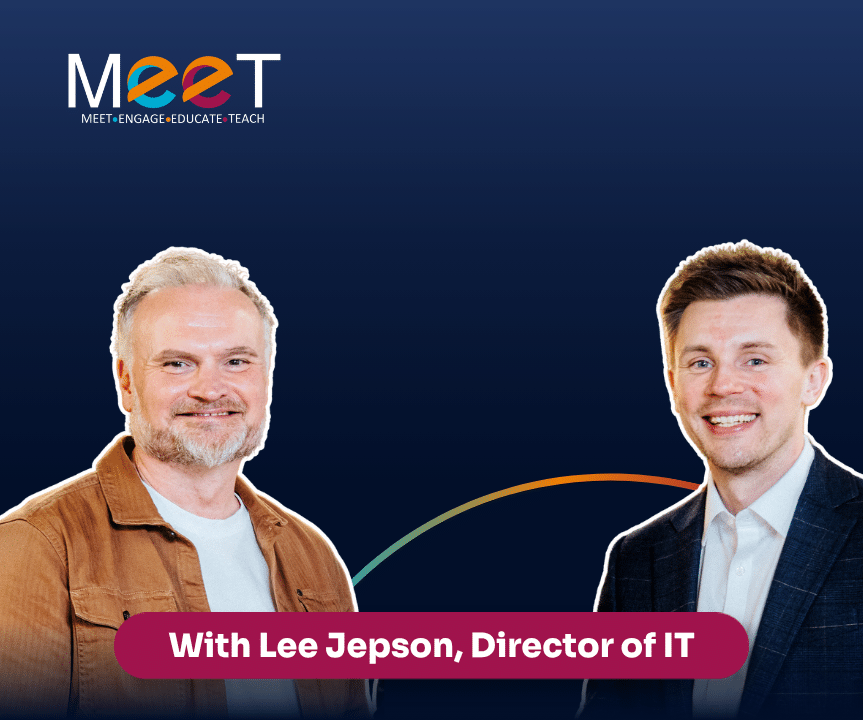
Watch: What should schools ask their IT provider?
L.E.A.D. IT Services holds IASME Cyber Essentials and Cyber Essentials Plus certification, the UK government-backed cyber security standard, and we help Derby businesses and organisations across the East Midlands achieve it too.
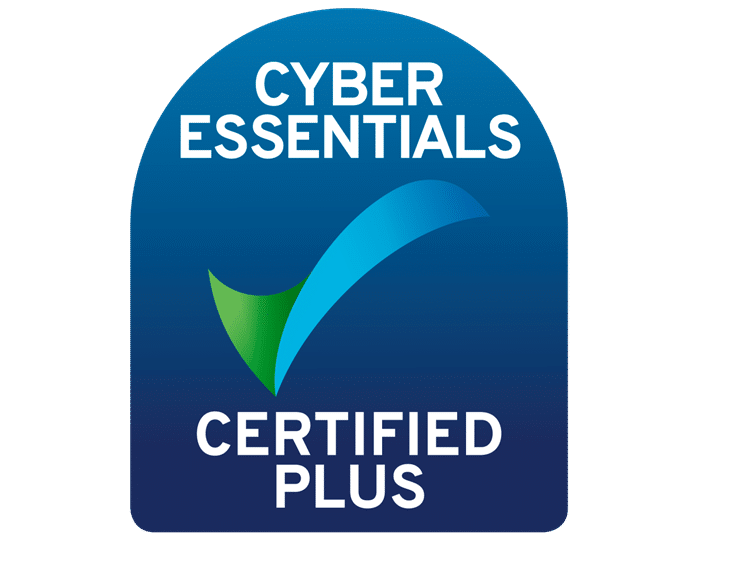
For our clients, this matters. When you entrust your IT infrastructure, business data and day-to-day systems to an external provider, you need confidence that the organisation looking after them operates to a verified security standard. Our Cyber Essentials Plus certification is independent, assessed proof that our systems, processes and team meet the baseline the UK government considers essential for any organisation handling data and operating online.
It means the environment in which we manage your IT – our own devices, networks, user accounts and software – is held to the same standard we help our clients achieve. You are not taking our word for it; you have the assurance of a government-backed accreditation behind it.
Cyber Essentials is a UK government-endorsed certification scheme that helps organisations protect themselves against the most common cyber threats. Developed by the National Cyber Security Centre (NCSC) and independently assessed through approved bodies such as IASME, it sets a clear, verifiable baseline of cyber security that every organisation, including Derby businesses of all sizes, should maintain.
Cyber Essentials Plus builds on this baseline: where standard Cyber Essentials relies on a self-assessment questionnaire, Plus requires an independent, hands-on technical audit – including vulnerability scans and on-site verification – again, carried out by an approved certification body
To hold the certification, an organisation must demonstrate active control across five technical areas: secure firewall configuration, secure system settings, access control, malware protection, and up-to-date software patching. Together, these controls address the vast majority of internet-borne attacks, making Cyber Essentials a meaningful standard for any Derby or East Midlands business looking to take cyber security seriously.

To achieve Cyber Essentials certification, your organisation must demonstrate compliance across five technical control areas defined by the NCSC. Each area is assessed through a self-assessment questionnaire, verified by an approved certification body such as IASME. Here is what each control requires in practice.
Every device that connects to the internet must be protected by a correctly configured firewall or equivalent network boundary defence. This applies to office networks, cloud environments, and individual devices used remotely.
What is required:
Computers, laptops, tablets, and smartphones must be configured securely before use, and unnecessary software and services must be removed or disabled. Default configurations from manufacturers are frequently insecure and must not be left unchanged.
What is required:
User accounts must be managed carefully, with access limited to what each person genuinely needs. Administrator-level accounts – which have the ability to make significant changes to systems, must be tightly controlled and used only when necessary.
What is required:
All devices must be protected against malware – malicious software designed to damage, disrupt or gain unauthorised access to systems. This can be achieved either through traditional antivirus software or application allow-listing, depending on the environment.
What is required:
Software vulnerabilities are one of the most common entry points for attackers. All software on in-scope devices must be kept up to date, with security patches applied promptly after they are released by the vendor.
What is required:
Cyber attacks are not reserved for large enterprises. Small and medium-sized businesses across Derby and Derbyshire are frequently targeted precisely because they are perceived as easier to breach. The NCSC estimates that Cyber Essentials controls can prevent around 80% of common cyber attacks – a significant, measurable reduction in risk for any local organisation.
Beyond protection, Cyber Essentials Plus certification carries real commercial value for Derby businesses. It is increasingly expected as a condition of supplier qualification, public sector contract tendering, and cyber insurance eligibility. For organisations working with the NHS, local government, or larger supply chains across the East Midlands, it is often a prerequisite.
Cyber Essentials Plus is a baseline we take seriously. It is not a badge for the website – it reflects how we actually configure, manage, and secure our systems. Derby businesses deserve to know that the IT provider looking after their infrastructure operates to a verified, government-backed standard.
– Lee Jepson, Director of IT, L.E.A.D. IT Services, Derby

When you work with L.E.A.D. IT Services, you are working with a Derby IT provider whose own systems, processes, and team have been independently verified to the Cyber Essentials Plus standard. The controls that protect our infrastructure – and the client environments we manage across Derby and the wider East Midlands – have been assessed and confirmed.
It also means we understand the certification process from the inside. When we support a Derby business through Cyber Essentials and Plus, we are not reading from a checklist – we are drawing on direct, practical experience of what the standard requires and how to meet it efficiently.
Every business in Derby faces cyber risk, whether they have thought about it in those terms or not. Cyber Essentials gives local organisations a structured, government-backed way to address the most common vulnerabilities. We know the process we know the pitfalls, and we know how to get Derby businesses across the line without it becoming a distraction from everything else on their plate.
– Lee Jepson, Director of IT, L.E.A.D. IT Services, Derby
Cyber Essentials is relevant to businesses of any size. For small businesses, it provides both meaningful protection and a credible signal to clients and partners that cyber security is taken seriously. Many Derby businesses we work with also find it opens doors to contracts that require certified suppliers.
With the right preparation, most organisations can achieve Cyber Essentials certification within a few weeks. L.E.A.D. IT Services works with businesses to identify and address gaps before the formal assessment, making the process as efficient as possible.
Cyber Essentials is a self-assessed questionnaire verified by an approved body. Cyber Essentials Plus includes the same controls but adds independent technical testing – including vulnerability scans and hands-on verification. For businesses supplying the public sector or handling sensitive data, Plus is often the required level.
Yes. Cyber Essentials and Cyber Essentials Plus require annual renewal. L.E.A.D. IT Services provides ongoing support to Derby clients to ensure their systems remain compliant and renewal is straightforward.
Cyber Essentials certification is well within reach for Derby businesses of any size – but getting there requires the right preparation. L.E.A.D. IT Services offers a structured, locally delivered readiness programme that takes you from your current position to certified, with as little disruption as possible to your day-to-day operations. We assess where you stand, address what needs to change, and guide you through the formal assessment – so your Derby team stays focused on running the business.
Gap analysis against all five NCSC control areas
Self-assessment questionnaire guidance
Policy and documentation templates included
Technical remediation of identified vulnerabilities
Preparation for external IASME assessment
Annual renewal support included
Available for Cyber Essentials and Cyber Essentials Plus. Serving businesses in Derby, Derbyshire, Nottingham, and across the East Midlands. Suitable for supplier qualification, public sector tendering, and cyber insurance compliance.