
10 questions schools should ask their IT provider. A Guide for Multi Academy Trusts
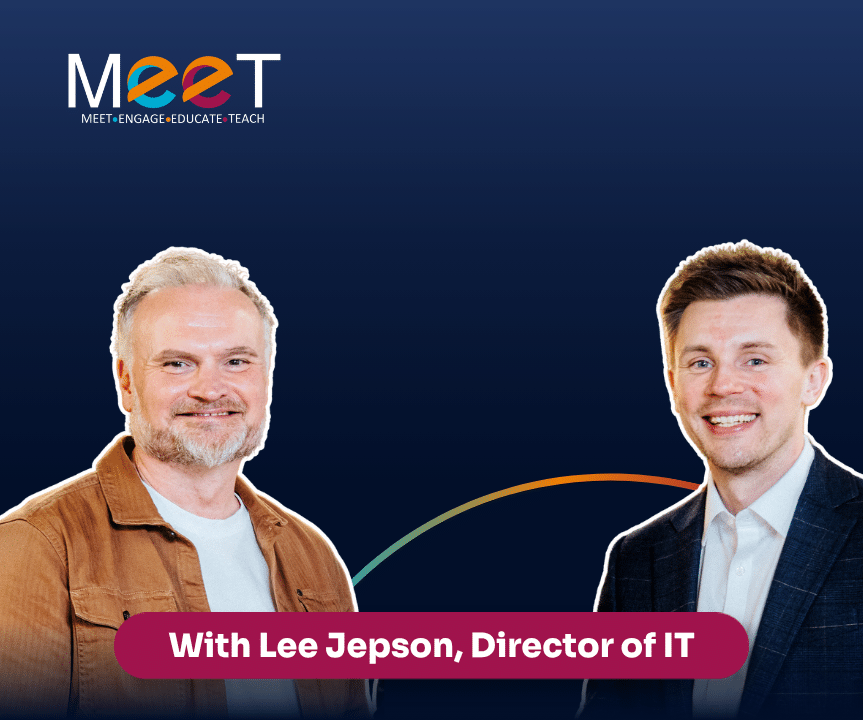

Interview by Chris Edwards
L.E.A.D. IT Services | Derby | May 2026
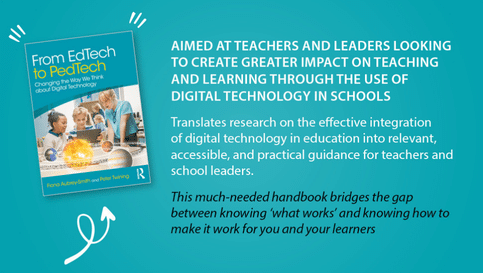
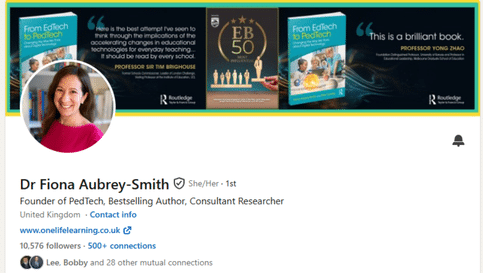
Founder of PedTech and Director of One Life Learning. Co-author of From EdTech to PedTech: Changing the Way We Think About Digital Technology. Named one of the Top 5 Visionary Women in Education (2024), EduFuturist of the Year (2025), and Freeman of the City of London. Founding Fellow of the Chartered College of Teaching. A co-founder of the The National PedTech Partnership and The Open School UK. 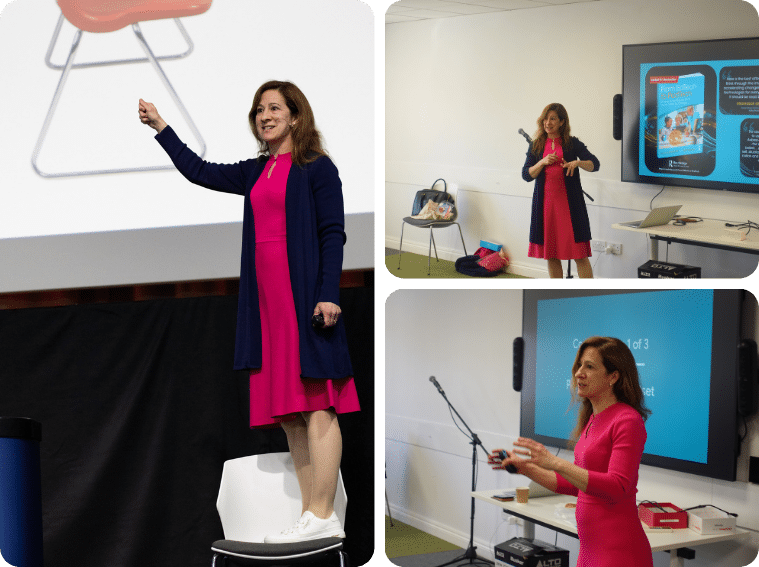
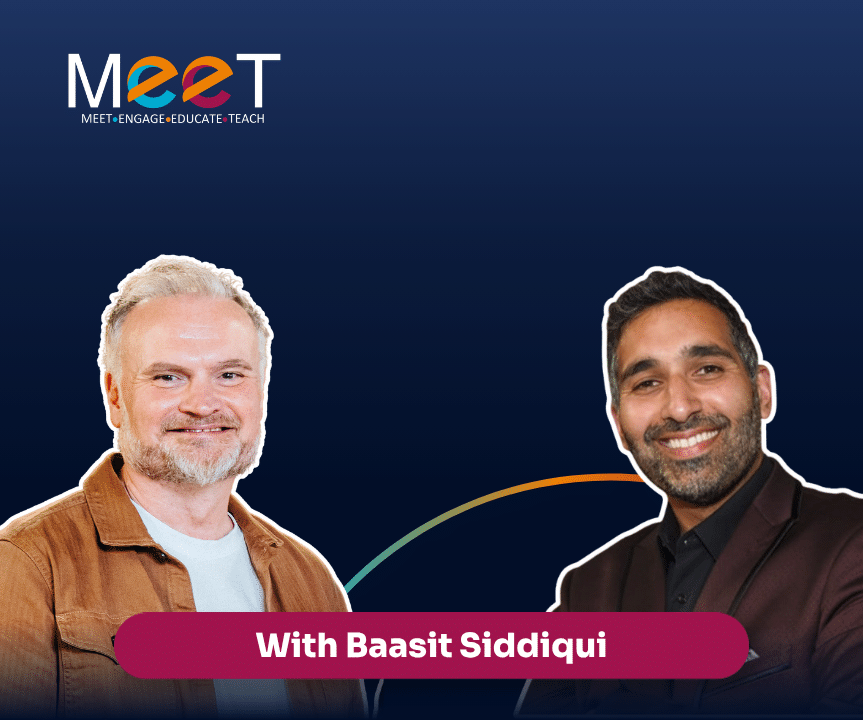
The sessions at MEET 2026 covered everything from AI literacy to infrastructure planning – but one name kept coming up in the corridors between talks. Dr Fiona Aubrey-Smith’s session on pedagogy-first approaches to digital technology was one of the hottest tickets in Derby on the day!. Booked out well in advance and buzzing with educators hungry for genuine expertise in action, it set the tone for what an edtech conversation in 2026 should look like.
We caught up with Fiona just after her session to dig into this theory of change she is championing – and why it matters so urgently right now.
L.E.A.D. IT’s Chris Edwards opened by asking why Fiona had made the move from last year’s remote delivery back to an in-person format. Her answer captured something many in the education sector are feeling.
There’s something very special about coming together. A kind of meeting of minds – the opportunity to discuss and reflect, and sometimes to find yourself part of a conversation you didn’t think you needed, but which turns out to be the catalyst for some really amazing thinking.
– Dr Fiona Aubrey-Smith, MEET 2026
It is a sentiment that cuts through the irony of an education technology conference making the case for old-fashioned human presence. But for Fiona, that is precisely the point. The technology should serve the human need – not replace it.
Pedagogy is about the structural support for learners and learning – not just what is taught, but how and why. It encompasses every decision an educator makes: how learning is designed and sequenced, how the classroom environment is shaped, how relationships between teacher and learner are built, and how progress is assessed and understood. Rooted in research and professional experience of experts such as Dr Fiona Aubrey-Smith, great pedagogy is always purposeful, adaptive and centred entirely on the needs and long-term outcomes of the learner.
Fiona’s work sits at the intersection of pedagogy and digital technology, but she is careful to resist the framing that technology is either hero or villain in the classroom. The premise of her work at PedTech and One Life Learning is rooted in something more fundamental than any particular app or device.
We’ve been working on developing a vision for a pedagogy-first approach to thinking about the use of digital technologies and digital tools.
That sounds straightforward. But Fiona is the first to acknowledge that education has spent years getting the order wrong – reaching for the technology first, then retrofitting a pedagogical justification. Her session asks schools and suppliers alike to reverse the sequence.
Chris put the direct question to Dr Aubrey-Smith: has bringing technology into the classroom been a positive or negative shift for teaching? Her answer was characteristically honest – and usefully uncomfortable.
I don’t think there’s a tidy answer. I’ve been in classrooms where technology is being used phenomenally well – creating a high and clear impact on learning, engagement, inclusionand dignity. I’ve also been in classrooms where technology has been used incredibly badly: getting in the way of learning, reducing learner dignity, wasting time, ineffective uses.
The distinction she draws is not between schools with lots of technology and schools with little. It is between schools where the technology is chosen because of a clear pedagogical intention, and schools where it is present simply because it is available or expected.
It’s not the technology itself. It’s not the ‘what’ necessarily. It’s about how it’s being used – and most importantly, why it’s being used.
Where schools have that pedagogical clarity – a precise, powerful vision for what they are trying to achieve in the learning space – technology becomes a tool that can extend, support and enhance. Where that clarity is absent, Fiona is blunt about what happens instead.
Without that pedagogical clarity, we just end up shoehorning more and more tools and tech into the space. It becomes a complete distraction from the main business, which is learning – and we do not want that in any classroom across the nation, or indeed worldwide.
This is where Fiona’s argument takes a wider sweep. The responsibility for purposeful edtech does not sit with schools alone. Hardware providers, software creators, management teams, and the schools themselves all carry a stake in the outcome.
I think we’ve all got a moral obligation to be thinking more sharply in this space. For suppliers and those working around schools, there’s a moral obligation to really understand pedagogy better – so that we can speak the same language, and really share a focus on what we need to be thinking about.
It is a message with teeth for the edtech industry. Fiona is not asking suppliers to become teachers. She is asking them to understand teaching well enough to have an honest conversation about whether their product genuinely serves learners – or simply sells well.
She also turns the lens toward the learners themselves – and in particular toward a generation that has grown up entirely inside the digital world.
Our Generation Alpha and Gen Z learners are those who have grown up in a digital world. They know what makes a difference positively. They know what makes a difference negatively. And we need to listen more to them.
– Dr Fiona Aubrey-Smith
Asked by Chris to distil her thinking into practical steps, Fiona offered four core principles – while noting, that ‘four is never going to be enough!..’
Start with learning, not with technology. Every digital decision should trace back to a clear and articulated understanding of what you are trying to achieve pedagogically – regardless of context, phase or sector.
If a digital tool or resource is to be used in a learning space, it must be accessible and available on demand, at the point of need, for every learner. Anything less undermines both inclusion and trust.
Consider what messages your classroom environment sends about digital and non-digital tools. Are learners given genuine choice and agency? Resources that cannot be accessed independently, when needed, are resources that do not serve their purpose.
Move beyond assumptions and correlations. Ask what the learner is actually experiencing, what they are internalising, and how this is shaping their future learning trajectory. Evidence matters – not anecdote.
Dr Fiona Aubrey-Smith’s message is clear; the question was never whether technology belongs in education. It does. The question has always been whether the adults responsible for putting it there have asked the right questions first.
At L.E.A.D. IT Services, that question sits at the heart of everything we do. As a provider of consultative, strategic IT support and managed services to schools and Multi-Academy Trusts across the region, we have always understood that technology decisions in education are not IT decisions – they are learning decisions.
Chris Edwards, Partnership Development Manager at L.E.A.D. IT Services, puts it plainly:
“Sitting with Dr Fiona and hearing her talk about pedagogy-first thinking was a genuine moment of alignment for us. Everything she described – starting with the learning intention, building around equity and impact, listening to young people – that is exactly the conversation we try to have with every school and trust we work with. A device, a network, a managed service: none of it means anything if it isn’t grounded in what teachers need to teach brilliantly and what learners need to thrive.”
That philosophy shapes every stage of L.E.A.D. IT’s work with schools – from initial consultation and infrastructure planning through to day-to-day helpdesk support and long-term strategic development. We listen before we recommend. We plan around educational vision, not technical convenience. And we stay alongside our partners for the long term, because sustainable technology in schools is never a one-off project – it is an ongoing commitment.
Fiona’s framework of pedagogical clarity, equity, learner agency, and measurable impact mirrors precisely the values that drive our work. Because when technology is procured thoughtfully, implemented carefully, and supported consistently, it does not distract from learning – it amplifies it.
Chris and the L.E.A.D. IT team offer free, no-obligation strategic IT consultations for schools and Multi-Academy Trusts – conversations that start not with products or price points, but with your educational vision and the learners you serve.
We’re not here to sell technology. We’re here to help schools make the most of it. If Fiona’s session has got you thinking about whether your current IT provision is really working for your learners, pick up the phone. A conversation costs nothing –but it might just change everything.
– Chris Edwards, Partnership Development Manager, L.E.A.D. IT Services
A: It means that before you reach for any digital tool or resource, you start with the learning intention – what do you want students to know, understand, or be able to do? Only once you have that clearly articulated do you ask whether a digital tool could support, extend, or enhance it. As Dr Aubrey-Smith puts it, the technology should never lead the thinking; the thinking should lead to the technology.
A: Dr Aubrey-Smith is clear that technology can – and does – harm learning when used without clear pedagogical purpose. This includes reducing learner dignity, creating distraction, wasting lesson time and embedding ineffective practices. The harm is not inherent to the technology itself but to the absence of intentional, evidence-informed decision-making around its use. Her advice: look beyond correlation and anecdote to the actual learner experience.
A: Fiona frames this as a moral obligation. Suppliers working with schools need to genuinely understand pedagogy – not as a marketing overlay, but as a shared language for honest conversation about impact. That means asking difficult questions about whether a product genuinely serves learner outcomes and being willing to hear the answer even when it is uncomfortable.
A: Agency is one of Dr Aubrey-Smith’s central concerns. She argues that providing resources – digital or otherwise – without also giving learners the agency to access and use those resources at their point of need renders them effectively useless. The question for schools is not just ‘what do we have?’ but ‘can every learner reach what they need, when they need it, in a way that preserves their dignity?’
A: Dr Aubrey-Smith believes so – and her session at MEET 2026 was itself evidence of the appetite. She describes in-person gatherings as uniquely generative: the unexpected conversations, the serendipitous connections, the ideas sparked by a session you didn’t know you needed. Remote formats have their place, but they struggle to replicate the ‘meeting of minds’ quality that she values most in professional learning.
A: EdTech – education technology – typically starts from the technology and asks how it can be used in education. PedTech, the concept Dr Aubrey-Smith has developed and champions, inverts this: it starts from pedagogy (the theory and practice of teaching and learning) and asks how, and whether, digital tools can serve it. The distinction matters because it reframes the entire decision-making process — putting teachers, learners, and learning outcomes at the centre rather than the product.
A: Start with the four principles Fiona outlined: examine your pedagogical intentions for each tool you use; assess whether equity and dignity are genuinely built in; reflect on the culture your environment communicates about digital and non-digital choices; and measure actual impact on learner experience rather than relying on assumptions.
A: Dr Aubrey-Smith is unambiguous: Generation Alpha and Gen Z learners have grown up in a digital world and have sophisticated, nuanced views on what technology does and does not do for their learning. Schools should be actively creating structured opportunities to listen to those views – not as a token gesture, but as genuine input into procurement, policy, and practice decisions. Students know when something works. They also know when it doesn’t – often before the adults in the room do.
A: Fiona is well aware of this risk. Her response is typically forensic: the proof is not in the language but in the decisions schools and suppliers make when no one is watching. Are technology purchases genuinely driven by learning need? Are teachers supported to evaluate impact critically? Are learners consulted? Are ineffective tools abandoned? Pedagogy first is not a framework to display on a wall – it is a discipline of thinking that has to be embedded in everyday professional culture.
A: Based on her session and this interview, Dr Aubrey-Smith’s answer is consistent: clarity of pedagogical intention – at every level of the system. That means teachers who can articulate why they are using a tool, senior leaders who build technology strategies around learning rather than procurement cycles, and suppliers who can explain their product’s impact on learner outcomes in the language of education rather than technology sales. When that alignment exists, the research shows the impact is significant.